
A Comprehensive Comparison of Hantavirus and COVID-19: Understanding Lethality, Transmissibility, and Severity
THOUGHTS
D-M
5/10/20264 min read
Lethality: A Comparative Analysis of Hantavirus and COVID-19
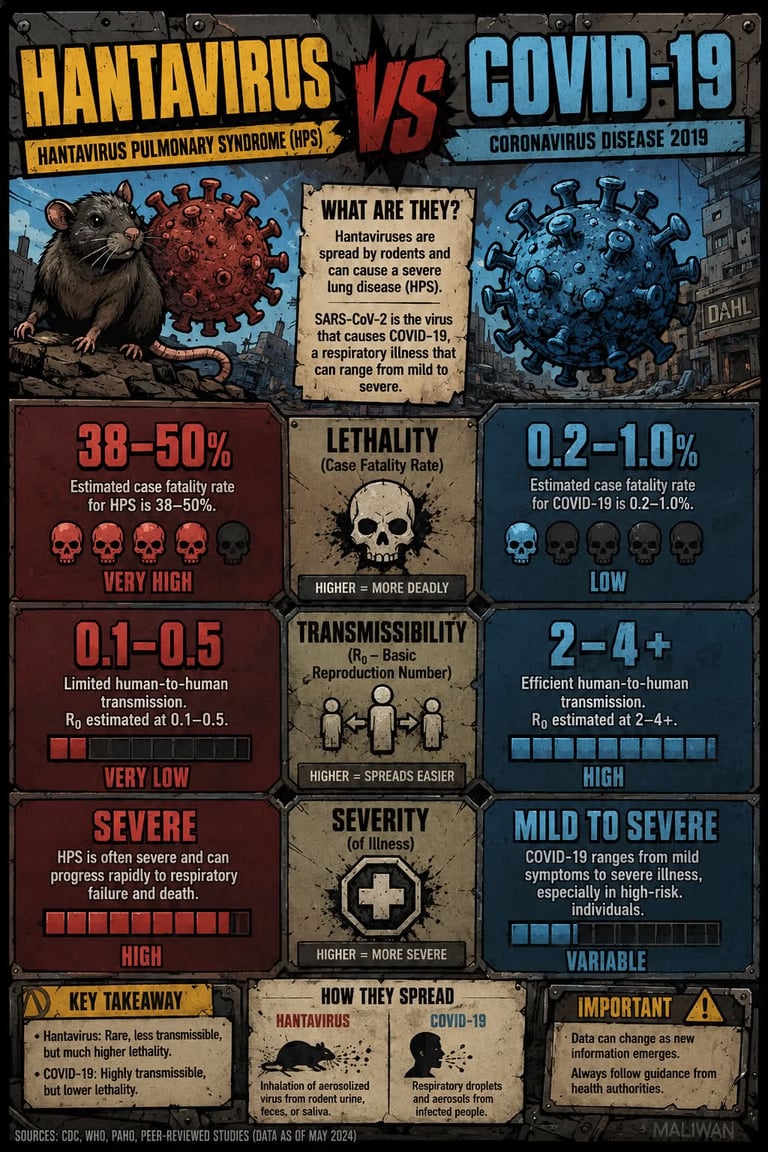
The lethality of viral infections is a critical factor in understanding their impact on public health. Hantavirus and COVID-19 exhibit distinct profiles in terms of mortality rates and demographic implications. Hantavirus, which is transmitted mainly through rodent droppings, urine, and saliva, is associated with various forms of hantavirus pulmonary syndrome (HPS) and other illnesses. The average mortality rate for HPS ranges between 30% to 40%, making it highly lethal among infected individuals. The severity of the disease often depends on the overall health of the patient, with those who have pre-existing conditions facing a higher risk.
On the other hand, COVID-19, a disease caused by the novel coronavirus SARS-CoV-2, has a significantly lower overall mortality rate, estimated at around 1% to 2%, but this figure varies widely based on numerous factors including age, sex, and comorbidities. For instance, older adults and individuals with underlying health issues have shown markedly higher mortality rates, with estimates indicating that these groups could face death rates as high as 10% or more in severe cases. The broad demographic impact of COVID-19 has also heightened awareness of its potential lethality across different populations.
In addition to the inherent lethality of each virus, the conditions affecting mortality rates are crucial. Public health interventions, healthcare access, and individual healthcare management are pivotal in influencing outcomes. For example, the timely availability of medical care can significantly affect survival rates for both Hantavirus and COVID-19. Overall, while Hantavirus presents a high risk of mortality, COVID-19's extensive transmissibility and lower lethality in the general populace have led to widespread concern and preventive measures globally. These factors illustrate the complex nature of analyzing lethality in infectious diseases, underscoring the need for ongoing research and public health strategies.
Transmissibility: How Hantavirus and COVID-19 Spread
Transmissibility refers to the ease with which a virus spreads among individuals within a population, which is a crucial aspect of understanding both Hantavirus and COVID-19. Hantavirus primarily spreads through contact with the excreta, urine, or saliva of infected rodents, particularly deer mice. This zoonotic transmission occurs when a person inhales aerosolized particles containing the virus or comes into direct contact with contaminated surfaces. It is important to note that Hantavirus is not transmitted between humans, which significantly limits its potential spread compared to COVID-19.
COVID-19, caused by the SARS-CoV-2 virus, has a markedly higher transmissibility. It is primarily spread through respiratory droplets released during conversation, coughing, or sneezing. These droplets can be inhaled by individuals within close proximity, leading to widespread person-to-person transmission. Additionally, the virus can survive on surfaces for varying periods, contributing to indirect transmission through contaminated objects. The basic reproduction number (R0) for COVID-19, an estimate of how many secondary infections one infected person can cause, has been estimated between 2 and 3, indicating a substantially higher transmissibility than Hantavirus, which does not have an R0 as it does not facilitate human-to-human transmission.
Several factors influence the transmissibility of these viruses. Environmental conditions play a significant role; for instance, Hantavirus is more prevalent in rural areas where rodent populations thrive. In contrast, COVID-19 spreads rapidly in densely populated urban regions. Behavioral factors, such as social distancing practices and mask usage, also impact the rate of transmission for COVID-19, while controlling rodent populations is essential in managing Hantavirus risks. The public health implications of these differences are profound; understanding the modes of transmission is essential to formulate effective prevention strategies tailored to each virus.
Severity of Illness: Symptoms and Long-Term Effects
The severity of illness associated with Hantavirus and COVID-19 can vary significantly, influenced by factors such as age, pre-existing health conditions, and the overall immune response of the individual. For both infections, early recognition of symptoms is essential for effective management and recovery.
COVID-19 primarily presents with respiratory symptoms, including fever, cough, and shortness of breath, but it can also manifest in various other symptoms such as fatigue, muscle aches, loss of taste or smell, and gastrointestinal complaints. While many individuals recover within a few weeks, some experience long-term effects, commonly referred to as "long COVID." These can include chronic fatigue, cognitive difficulties, and persistent respiratory symptoms, which may persist for months following the initial infection.
In contrast, Hantavirus infections often begin with non-specific symptoms, including fever, fatigue, and muscle aches, which can progress to more severe illnesses such as Hantavirus Pulmonary Syndrome (HPS). In HPS, patients may experience intense respiratory distress and fluid accumulation in the lungs within a week of symptom onset. The severity of HPS can lead to a high mortality rate, particularly among older adults or those with underlying health issues. Recovery from Hantavirus can take considerable time, often involving a prolonged hospitalization period.
The long-term effects of Hantavirus are less well-documented than those of COVID-19. Patients recovering from HPS may face lasting impacts on lung function and an increased risk of complications later in life. Furthermore, the severity of both diseases can be exacerbated in individuals with pre-existing health conditions, which underlines the importance of understanding each virus’s implications for at-risk populations.
Vaccine Skepticism and Public Response to Viral Outbreaks
The response to viral outbreaks, such as COVID-19 and Hantavirus, often triggers a spectrum of public sentiment, notably vaccine skepticism. This skepticism can influence public health measures and overall community compliance regarding vaccinations and virus containment strategies. The roots of this skepticism are multifaceted, including deep-seated beliefs about medical practices, mistrust in pharmaceutical companies, and concerns over government interventions. Social media plays a crucial role by amplifying misinformation, leading to increased anxiety regarding the safety and efficacy of vaccines.
In recent times, discussions about potential renewed lockdowns have sparked fear and speculation within communities. Some individuals believe that the re-emergence of restrictive measures may stem from next waves of viral infections. This perception often reflects psychological factors such as fear of contagion, regulatory fatigue, and loss of control over one’s environment during pandemics. Coping mechanisms that might have once aligned with compliance have slowly shifted into a more defensive disbelief in public health directives, particularly regarding vaccines that have been developed rapidly.
Despite these challenges, it is imperative to address the misconceptions surrounding vaccine safety and efficacy. Vaccines undergo rigorous testing and monitoring before they are approved for public use, ensuring they meet safety standards. Additionally, scientific data consistently demonstrate the effectiveness of vaccines in significantly reducing the severity of diseases, thereby aiding in pandemic containment. By fostering transparent dialogue about these topics and providing accurate information, health authorities can mitigate vaccine hesitancy and promote a more constructive public response. Developing trust through community engagement and education will be critical in overcoming the divide created by misinformation and skepticism.